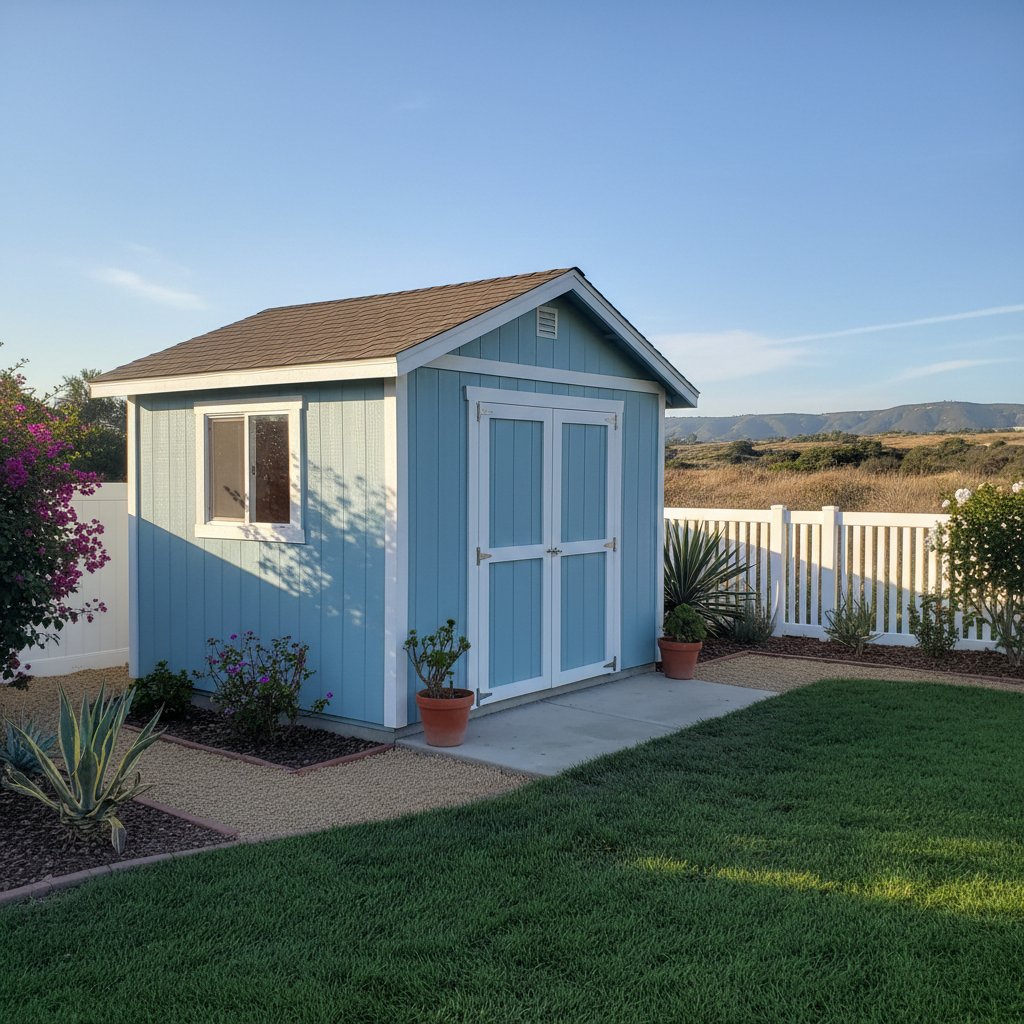
Got a shed, do you? Maybe it's your trusty storage spot, a quiet backyard office, or just your personal hideaway. Whatever its purpose, you want it to stick around. Here in Oceanside, we don't exactly deal with brutal winters, but our coastal environment throws its own curveballs. Salt air, that strong California sun, and the occasional damp spell can really wear things down. This isn't about fancy upgrades, mind you; it's about smart, regular care to keep your shed solid for years.
Making Your Shed Last in Our Coastal Climate
Around here, moisture, UV rays, and salty air are the big three enemies for any structure. You might think, 'Oh, it's just a shed,' but a little preventative care goes a seriously long way. Think about your house – you wouldn't just ignore peeling paint or a leaky faucet, would you? Your shed deserves that same kind of attention.
First off, good drainage is absolutely key. We get those heavy morning fogs and some serious downpours sometimes, especially in late winter and spring. So, make sure water isn't just sitting around the base of your shed. If you've got gutters, keep them clean. No gutters? Consider putting in a simple trench or a gravel border to steer water away. The ground right around your shed should always slope away from the foundation.
Sun exposure is another huge factor. Our California sun is no joke, even when there's a nice breeze. UV rays slowly break down paint, sealants, and even some plastics. If your shed is painted, a fresh coat every few years isn't just for looks; it really acts as a protective shield. For wood sheds, a good quality stain or sealant with UV inhibitors is essential. I always suggest checking the manufacturer's instructions for how often to reapply, but usually, every 3-5 years is a pretty good goal.
And that salt air? It can speed up corrosion on metal bits like hinges, latches, and even certain roofing materials. A quick rinse with fresh water on those metal parts, especially after a particularly windy or foggy stretch, can really help. After that, a light dab of rust-inhibiting lubricant can keep things moving smoothly and stop pitting.
What Regular Maintenance Looks Like
This won't be a full-time job, honestly. Most of it is just common sense and a quick look-over a couple of times a year. I usually tell folks to do a thorough check-up twice annually – maybe once in late spring after the last of the 'May Gray' and 'June Gloom' finally clears, and then again in late fall before any potential winter rains hit.
- Check the Roof: Look for any loose shingles, cracks, or spots where water might be pooling. Clear off any leaves or debris. If you have a flat roof, check for standing water and any cracks in the membrane.
- Inspect the Exterior: Walk all the way around the shed. Are there any spots with peeling paint, rotting wood, or cracks in the siding? Pay extra close attention to the corners and where the siding meets the foundation. Any gaps there where critters could sneak in?
- Doors and Windows: Give them a good open and close. Do they stick? Are the latches secure? Check the caulking around windows and door frames. If it's cracked or missing, re-caulk it. Make sure the weatherstripping is still doing its job.
- Foundation Check: Look for cracks in the concrete slab or any shifting if it's sitting on piers. Make sure no plants or bushes are growing too close to the base, which can trap moisture.
- Interior Scan: Step inside. Do you smell mildew? See any water stains on the ceiling or walls? Look for signs of pests – droppings, chewed wood, or nests.
Warning Signs of Bigger Problems
Some issues go way beyond just cleaning or a fresh coat of paint. These are the red flags that tell you something's seriously wrong and needs attention, like, yesterday.
- Persistent Leaks: If you're always finding water inside, even after just a little rain, you've got a real problem. This can quickly lead to rot, mold, and structural damage.
- Sagging Roof or Walls: This is a major structural issue. If your roofline isn't straight or your walls are bowing out, don't ignore it. It usually means there's too much weight or a foundation problem.
- Extensive Wood Rot: Small patches of rot are fixable, but if you've got big sections of soft, crumbling wood, especially near the bottom or around windows and doors, that's a clear sign of ongoing moisture getting in.
- Pest Infestations: A few spiders are normal, sure, but if you're seeing signs of termites, carpenter ants, or rodents making themselves at home in your shed, you need to act fast. They can cause significant damage to the structure and anything you've got stored inside.
- Foundation Cracks or Shifting: Hairline cracks in concrete might be normal, but wide, spreading cracks or any sign that the shed isn't level anymore could mean serious foundation trouble. This is especially true if your shed is on sandy soil, common in some parts of Oceanside, particularly closer to the coast.
When to Call a Professional
Look, I'm a big fan of DIY when you can do it safely and effectively. But there are definitely times when you just need an expert. If you spot any of those 'warning signs' I just mentioned, that's usually a good time to pick up the phone. Things like major roof repairs, significant structural damage, or extensive wood rot are often more than most homeowners can handle with a weekend and a few basic tools.
If you're not sure how bad the damage is, or if you just don't have the time or specialized tools for a big repair, that's when you call someone like us at Oceanside Shed Solutions. We can check things out, give you an honest opinion, and handle the repairs the right way. It's always smarter to deal with these issues early before they turn into even bigger, more expensive headaches. A little proactive care and knowing when to call in the cavalry will keep your shed serving you well for decades.