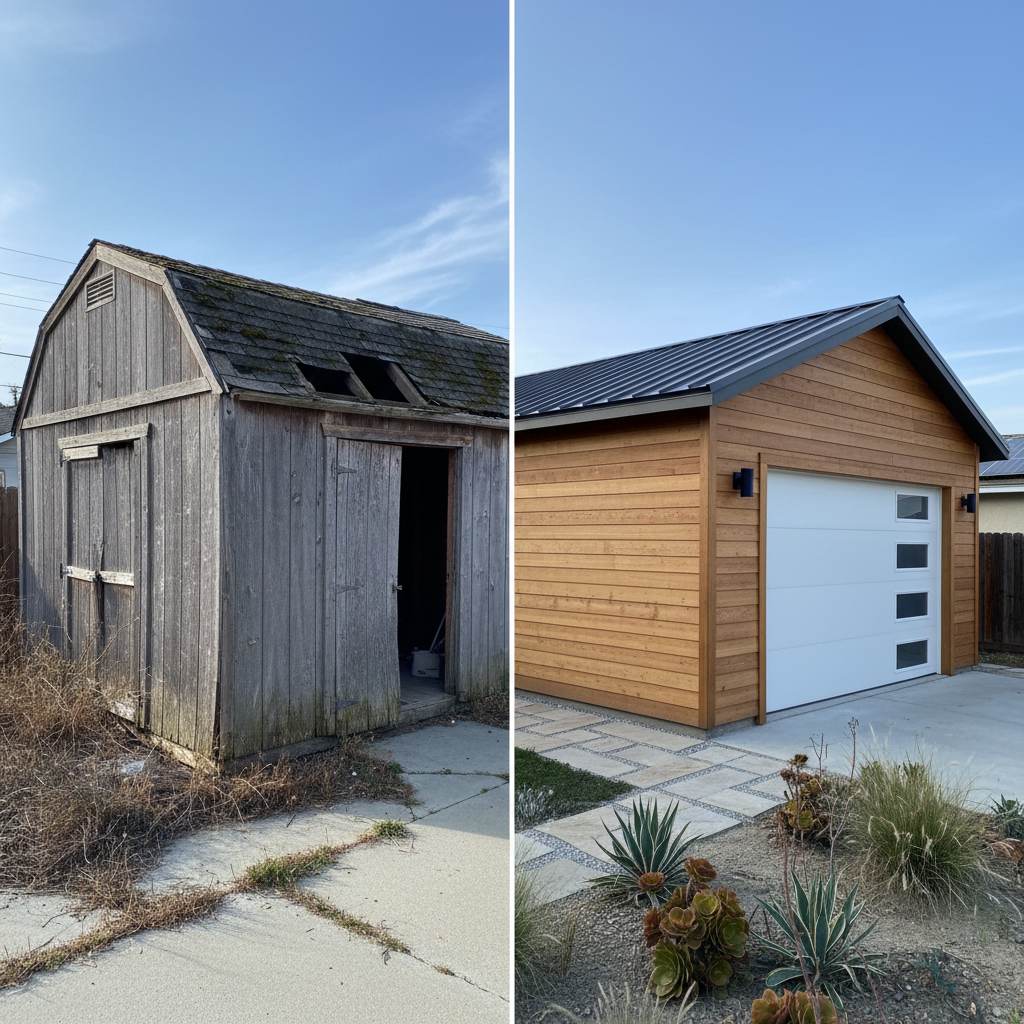
You're thinking about adding a new garage or maybe replacing an old, beat-up one, right? One of the first big questions that pops up is whether to go with an attached garage or build something completely separate. It's not a simple choice, and I see folks wrestle with it all the time here in Oceanside. There are good reasons for both, but for our specific neck of the woods, one usually makes a lot more sense.
Attached Garages: Convenience at a Cost?
An attached garage is what most people picture. It shares a wall with your house, meaning you can walk straight from your car into your kitchen or mudroom without stepping outside. That's super convenient, especially when it's raining, or you're hauling groceries. No more getting soaked or lugging heavy bags across the yard.
From a building standpoint, it can sometimes seem cheaper initially because you're only building three new walls instead of four. You're tying into existing utilities pretty easily too – electrical, maybe even plumbing if you want a sink out there. But here's where it gets tricky for us. When you attach a garage, you're essentially expanding your home's footprint. That means it falls under stricter residential building codes for insulation, fire ratings, and sometimes even foundation requirements. You're adding to your conditioned living space, even if it's just for cars.
Durability and maintenance? Well, because it's part of your house, any structural issues, pests, or even just general wear and tear in the garage can impact your main home. If you've got a leaky roof on an attached garage, that water can easily find its way into your attic or walls. Plus, you've got to think about the fumes. Cars, lawnmowers, paint cans – all that stuff puts off odors and chemicals. Even with good ventilation, some of that can drift into your living space, which isn't ideal for air quality.
Detached Garages: The Standalone Solution
Now, a detached garage is a separate building. It stands on its own, usually a little ways from your house. This is often what I recommend for folks looking for a dedicated workshop, extra storage, or even a potential Accessory Dwelling Unit (ADU) down the line. We build a lot of these at Oceanside Shed Solutions, and for good reason.
Cost-wise, it might seem like you're building more because it's a complete, four-walled structure. However, because it's separate, it often falls under less stringent building codes than an attached structure. You still need permits, of course, and a solid foundation – especially with our sandy soil near the coast, you can't skimp on that. But you might not need the same level of insulation or fire-rated drywall that an attached garage demands, which can save you money on materials and labor. Utility runs might be a bit longer, but they're usually straightforward to trench.
Durability and maintenance are often simpler. If you've got a problem with the garage, it's generally contained to the garage. No worrying about a small leak in the garage roof turning into a major headache for your bedroom ceiling. And those fumes I mentioned? They stay out of your house. You get a clear separation, which is great for air quality and peace of mind.
Aesthetically, a detached garage can really enhance your property. You can match it to your home's style or give it its own unique look. It also offers more flexibility for future expansion or conversion. Want to add a second story for an office? Much easier when it's not tied directly to your main house's structure.
My Recommendation for Oceanside Homeowners
For most homeowners in Oceanside, especially if you've got the space in your yard, I lean heavily towards a detached garage. Why? Several reasons specific to our area:
- Coastal Air & Humidity: We get a lot of moisture in the air. Keeping a buffer between your primary living space and a garage, where tools and vehicles might bring in more humidity or even salt, is a smart move for your home's long-term health.
- Flexibility for Future Use: Many folks here eventually consider adding an ADU for family or rental income. Starting with a detached structure gives you a much clearer path to that kind of conversion down the road, often with fewer regulatory hurdles than trying to convert an attached space.
- Noise and Fumes: Whether it's a noisy compressor for your woodworking hobby or the smell of gasoline, keeping that stuff separate from where you eat and sleep just makes sense.
- Property Value: A well-built, aesthetically pleasing detached garage or workshop can significantly boost your property value and curb appeal, often more so than an attached addition that might feel tacked on.
Ultimately, the best choice depends on your specific needs, budget, and lot size. But don't just think about the immediate convenience. Consider the long-term implications for your home's structure, air quality, and future potential. Give me a call at Oceanside Shed Solutions, and we can walk your property and talk through what makes the most sense for you. We've built enough of these around here to know what works and what doesn't.